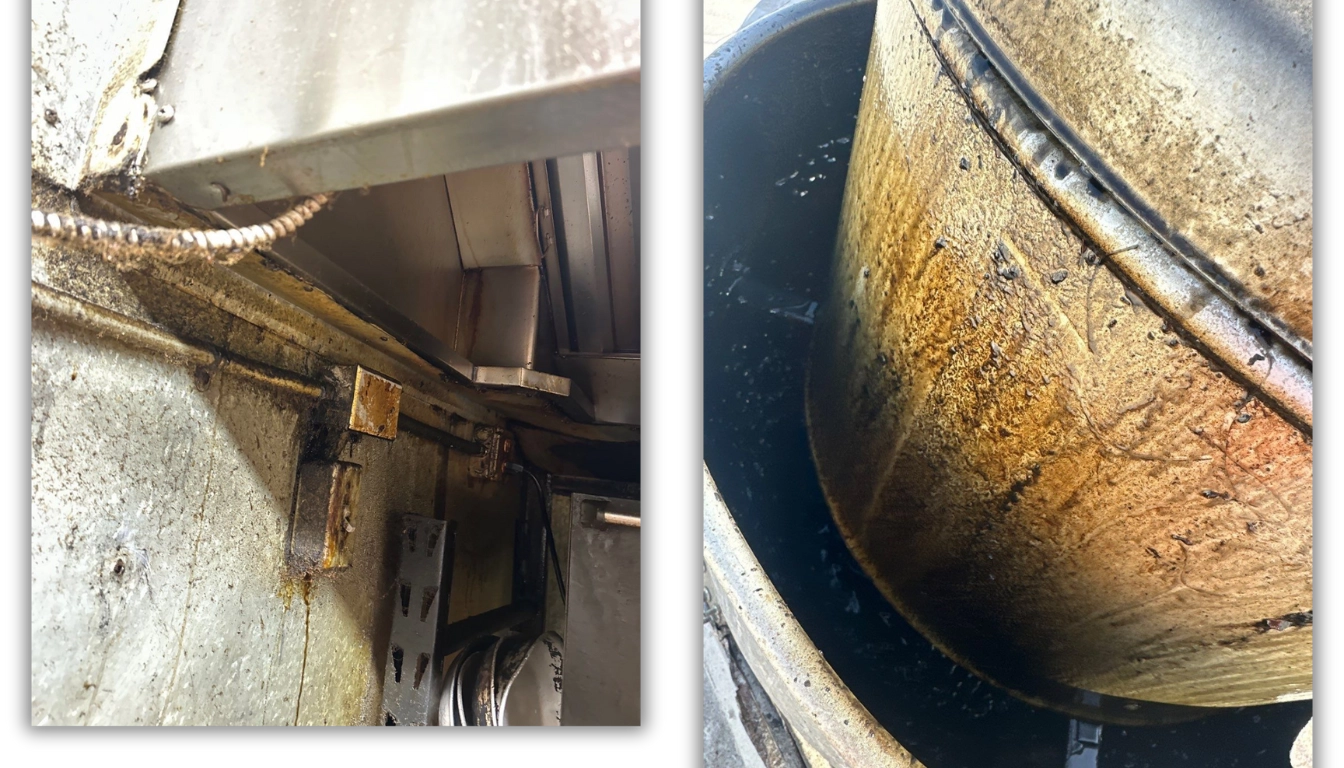
Why Grease Fires Are the Biggest Threat to Your Restaurant
According to the National Fire Protection Association (NFPA), cooking equipment is involved in 61% of all restaurant fires, and grease buildup in exhaust hoods and ductwork is the primary fuel source. The consequences are devastating: the average commercial kitchen fire causes over $45,000 in property damage, and many restaurants never reopen after a major fire.
The good news? Grease fires are almost entirely preventable with proper kitchen exhaust maintenance.
Step 1: Schedule Regular Hood Cleaning According to NFPA-96
NFPA-96 Chapter 11 specifies cleaning frequencies based on your cooking operation type:
- ●Monthly — Solid fuel cooking (wood, charcoal, mesquite)
- ●Quarterly — High-volume operations (24-hour restaurants, fast food)
- ●Semi-annually — Moderate-volume cooking
- ●Annually — Low-volume cooking (churches, seasonal operations)
Skipping or delaying cleanings is the most common cause of grease fires. Stick to the schedule that matches your kitchen.
Step 2: Clean the ENTIRE Exhaust System, Not Just the Filters
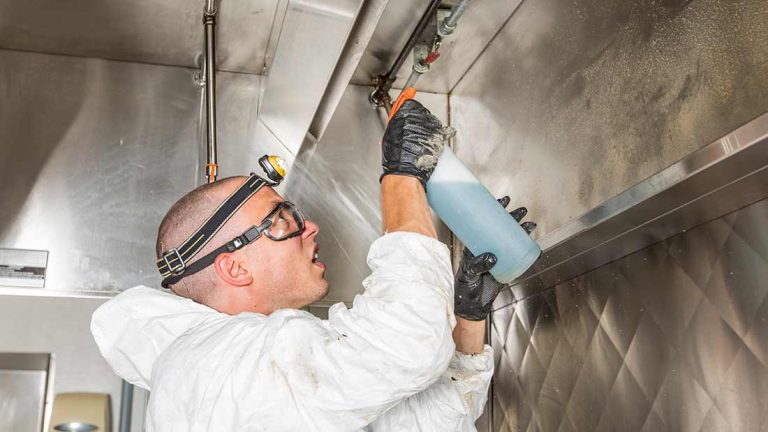
Many restaurant owners think cleaning the baffle filters is enough. It is not. Grease migrates past filters into the plenum, ductwork, and rooftop fan housing. A proper cleaning must include:
- ●Baffle filters and filter tracks
- ●Hood interior and plenum chamber
- ●All ductwork from hood to rooftop
- ●Exhaust fan and fan housing
- ●Rooftop grease containment
If your cleaning company only washes the filters, your kitchen is still at risk.
Step 3: Inspect and Maintain Fire Suppression Systems
Your kitchen fire suppression system (Ansul, Pyro-Chem, or similar) is your last line of defense. Ensure:
- ●Semi-annual inspections by a certified technician
- ●Nozzles are properly aimed at cooking surfaces
- ●Fusible links are clean and functional
- ●Manual pull station is accessible and tested
Step 4: Train Your Staff on Fire Safety Protocols
Every kitchen employee should know:
- ●How to activate the fire suppression system manually
- ●Where fire extinguishers are located (Class K for kitchen fires)
- ●The evacuation plan and assembly points
- ●Never to use water on a grease fire
Step 5: Keep Detailed Cleaning Records
Documentation protects you in three critical scenarios:
1. Fire marshal inspections — Proof of compliance avoids fines 2. Insurance claims — Adjusters review records before approving claims 3. Legal liability — Records demonstrate due diligence
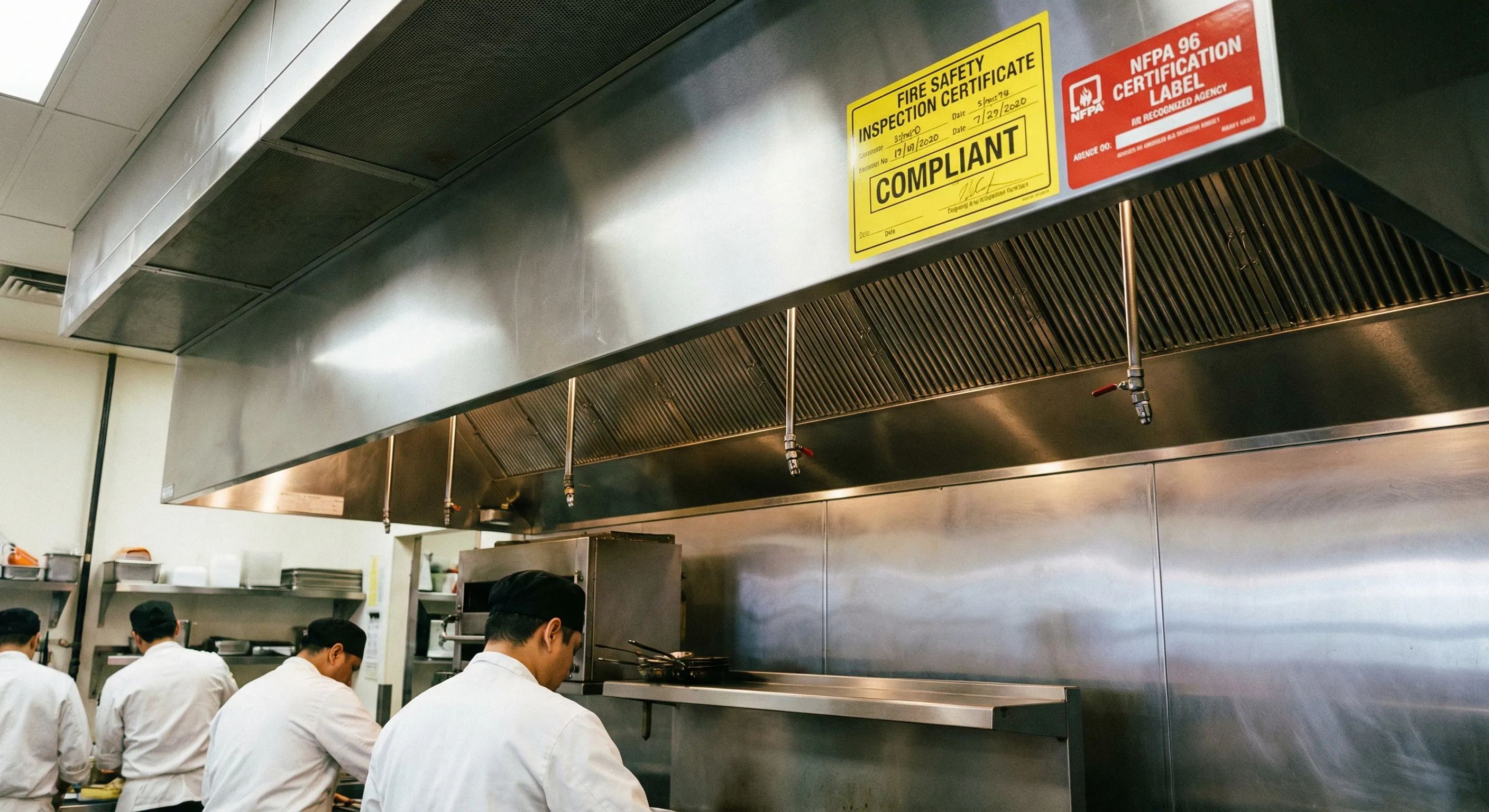
Every cleaning should include before-and-after photos, a detailed scope report, and an official compliance certificate.
Protect Your Restaurant Today
Don’t wait for a fire marshal citation or worse—a grease fire. Professional hood cleaning is the single most effective step you can take to protect your business. Contact D&E Hood Cleaning LLC for a free assessment of your kitchen’s fire risk.