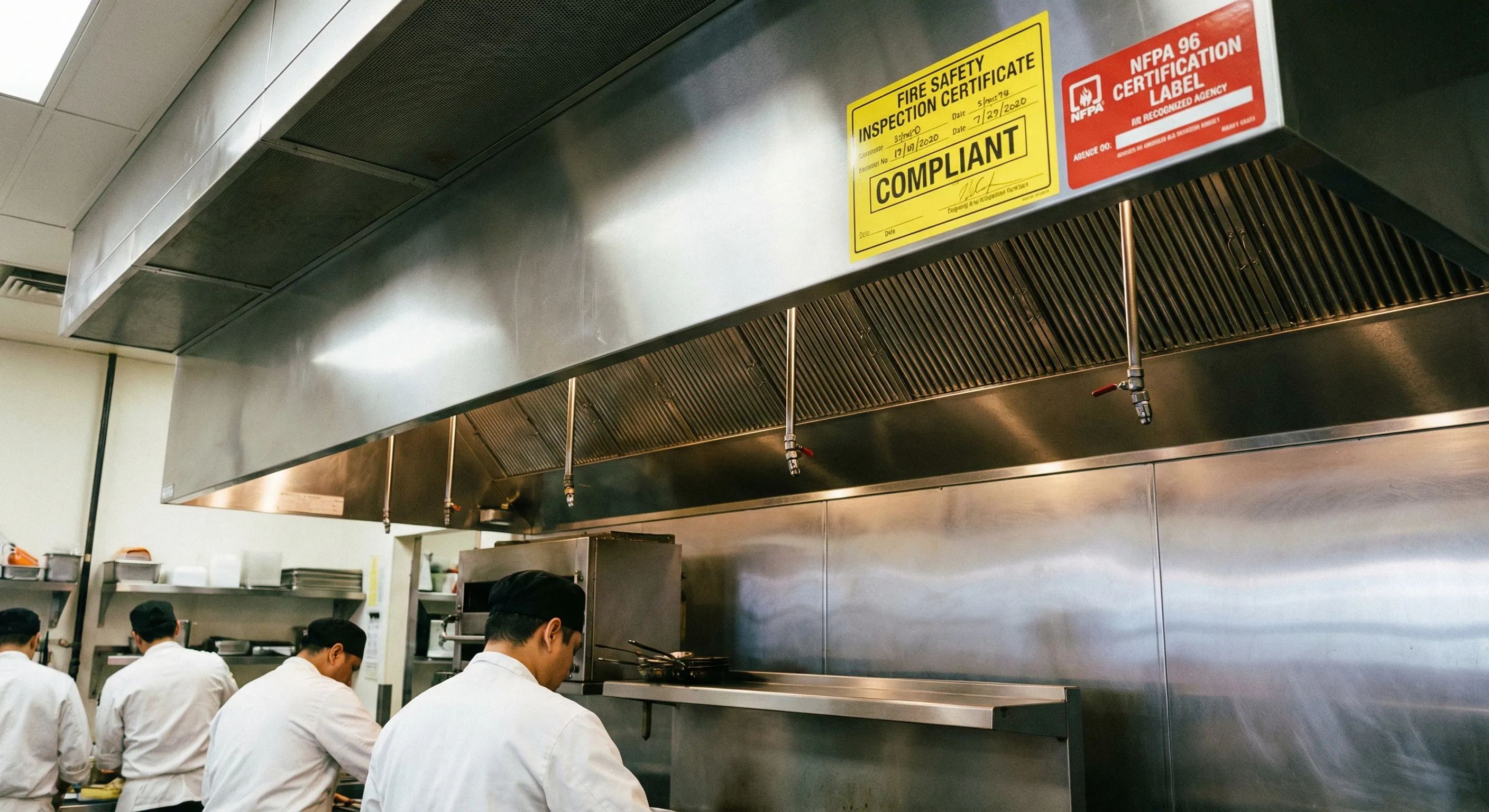
NFPA-96 and California Fire Code: The Legal Framework
If you operate a commercial kitchen in California, you are legally required to comply with NFPA-96—the Standard for Ventilation Control and Fire Protection of Commercial Cooking Operations. California Health & Safety Code Section 13143 and the California Fire Code adopt NFPA-96 by reference.
Non-compliance is not just a risk—it is a violation of state law.
Key NFPA-96 Requirements for Restaurant Owners
Cleaning Frequency (Chapter 11)
NFPA-96 Chapter 11.4 specifies minimum cleaning frequencies based on the type and volume of cooking:
- ●Monthly: Solid fuel cooking operations (wood-fired pizza, charcoal grills, mesquite smokers)
- ●Quarterly: High-volume cooking operations (fast food, 24-hour restaurants, wok cooking)
- ●Semi-annually: Moderate-volume cooking operations (full-service restaurants, hotel kitchens)
- ●Annually: Low-volume cooking operations (churches, day camps, seasonal facilities)
These are minimum standards. If your kitchen produces heavy grease loads, more frequent cleaning may be required.
What Must Be Cleaned
NFPA-96 requires cleaning of the entire exhaust system, not just filters:
- ●Exhaust hoods, plenums, and filter assemblies
- ●All ductwork from hood to point of discharge
- ●Exhaust fans and fan housing assemblies
- ●All accessible components and surfaces
Documentation Requirements
After each cleaning, the service provider must supply:
- ●Name of the servicing company and technician
- ●Date of service and areas cleaned
- ●Compliance statement confirming cleaning met NFPA-96 standards
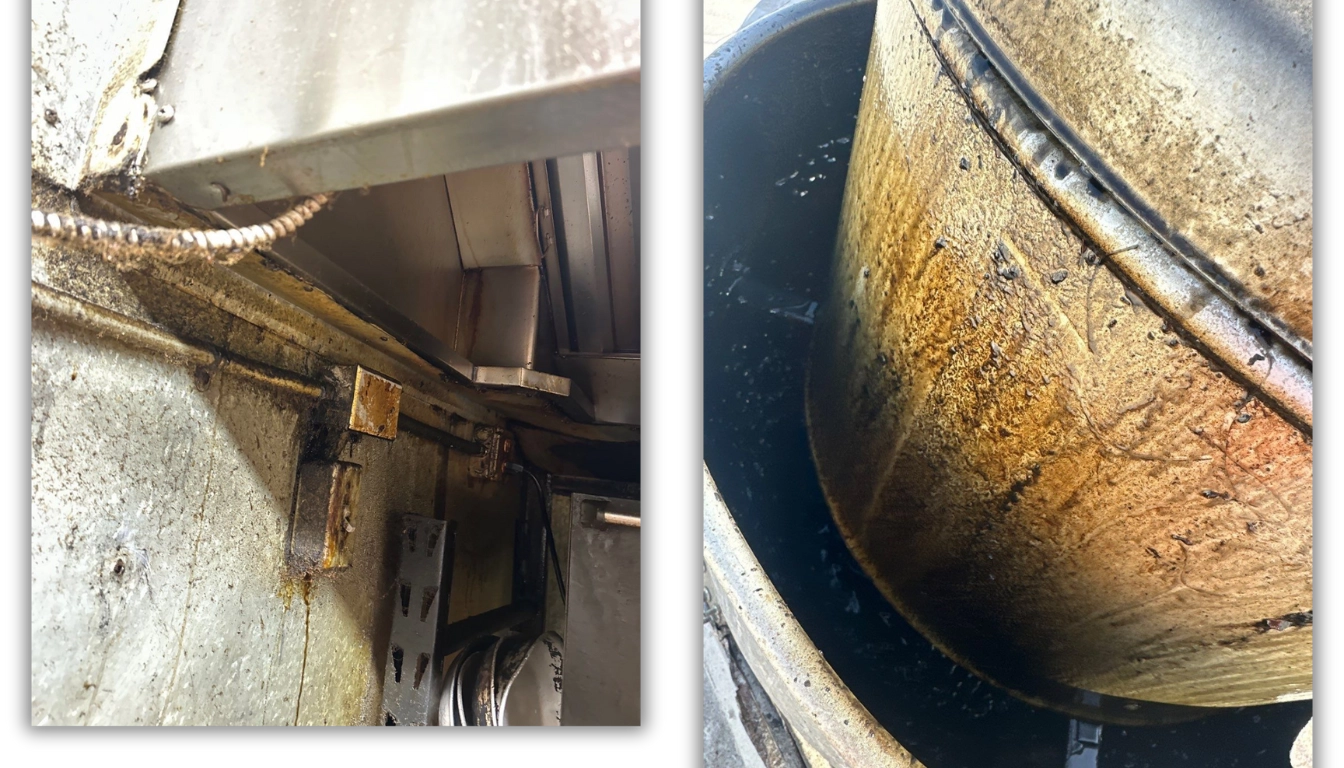
- ●Before and after condition documentation
This documentation must be retained on premises and available for fire marshal inspection at any time.
Common Violations That Trigger California Fire Marshal Fines
1. Grease accumulation exceeding allowable limits — The most common violation 2. No cleaning records available — Even if the hood was recently cleaned 3. Sealed or missing access panels — Inspectors must be able to view duct interiors 4. Expired fire suppression system certification — Semi-annual inspections required 5. Cleaning frequency not matching cooking type — A high-volume kitchen cleaned annually
Fines and Penalties in California
California fire code violations can result in:
- ●Administrative fines: $500 to $10,000+ per violation
- ●Operational shutdown orders: Immediate closure until corrected
- ●Insurance implications: Policy cancellation or claim denial
- ●Legal liability: Personal liability for the business owner in case of a fire
How to Stay Compliant
The simplest path to continuous NFPA-96 compliance:
1. Hire a certified hood cleaning company that understands NFPA-96 requirements 2. Establish a cleaning schedule that matches your cooking operation type 3. Maintain all documentation on-site and organized 4. Schedule fire suppression inspections semi-annually 5. Address deficiencies immediately when identified during cleaning
D&E Hood Cleaning LLC specializes in NFPA-96 compliance for California restaurants. Every service includes complete documentation, compliance certificates, and expert guidance on maintaining year-round compliance. Contact us for a free compliance assessment.